
Introduction
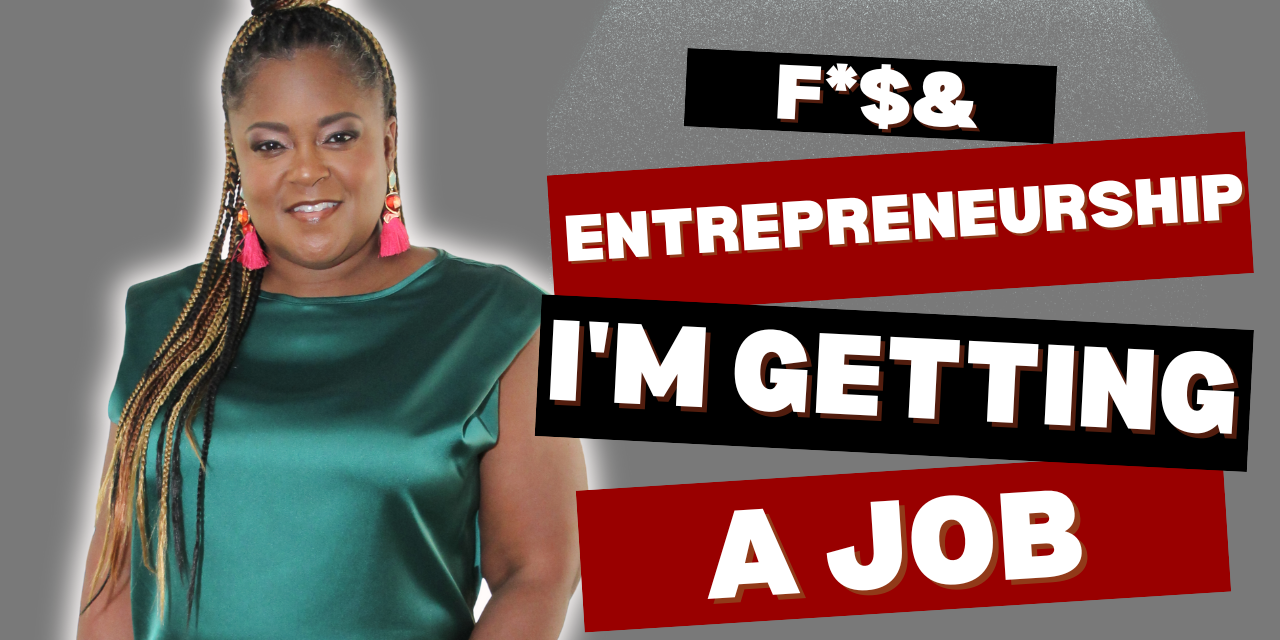
In my recent video, I addressed the online uproar around Tabitha Brown’s comment about “going back to work,” and used that moment to share my own truth. I’m a business owner who reached a crossroad and seriously considered getting a job and I want to be candid with you about what led me to consider that choice, what it taught me about entrepreneurship, and how you can make a healthier, more strategic decision if you find yourself in the same place.
This post expands on that conversation. I’ll walk you through the messy reality of running a business, the mistakes I made (and how I fixed them), how financial stress affects mental health and decision-making, and practical steps you can take right now to stabilize your business or your life; whether you keep going as an entrepreneur or opt for the stability of a job.
The Reality of Entrepreneurship: It’s Not All Peaches and Cream
Being a business owner isn’t the Instagram-filtered life people think it is. It takes focus, discipline, and a ton of work. There are highs and lows, wins that feel amazing and dry spells that make you question everything. And the truth is, sometimes you do everything right and still don’t see traction.
That reality hit me. I was frustrated because my business wasn’t performing the way I expected. After some hard reflection, I realized it wasn’t the market or bad luck. It was that I wasn’t doing the consistent, focused work that true growth requires. I had slipped into patterns that keep entrepreneurs busy without being productive.
Non-productive stuff like
- Doing too much busy work that doesn’t move the needle.
- Failing to delegate critical tasks and trying to do everything myself.
- Inconsistent marketing such as sporadic posts or campaigns instead of a sustained strategy.
- Comparing myself to others instead of tracking my own progress.
- Obsessing over vanity metrics (likes, followers) instead of actual profit and cash flow.
Yes, that last one is wild coming from an accountant. But it’s real. You can be data-driven and still focus on the wrong data. For business sustainability, cash flow and profit are the metrics that matter most.
What I Was Doing Wrong (So You Don’t Have To)
Here are the specific missteps I identified when I took an honest look at my business and how they may look for you:
- Inconsistency: I wasn’t executing consistently. I would get fired up for a week or two, then slow down and lose momentum.
- Busy work over impact: I prioritized tasks that felt productive but didn’t contribute to growth, like endless tweaks and admin tasks I could have delegated.
- No clear marketing cadence: I wasn’t building relationships or nurturing leads consistently, so the pipeline dried up.
- Wrong metrics: I focused on surface-level indicators rather than tracking profitability, client acquisition costs, and lifetime value.
- Not delegating: Trying to be everything slowed me down and kept the business from scaling.
Once I identified these issues, I had to make a choice: get a job for the security and steady income, or get my sh*t together and rebuild the business the right way. I chose to fix my business. This time with a plan and a safety mindset.
The Choice: Get a Job or Get Your Stuff Together?
There’s no shame in taking a job. There’s also no shame in doubling down on your business. The right decision is the one that preserves your family’s stability and your mental health.
Here’s how I approached the decision logically and compassionately:
- Assessed my financial runway: How long can I sustain the business without a significant revenue uptick? What are the bare minimums for bills and family needs?
- Set realistic milestones: I gave myself a timeframe to show traction after implementing changes. If I didn’t see measurable progress within that window, I would reach out to my network and consider employment.
- Planned for contingencies: I examined my network and wrote down potential job opportunities I could pursue if needed, not as a failure, but as a backup plan to protect my family and sanity.
That last point is crucial: have a plan. Don’t treat a job offer as a personal loss. I view it as a pragmatic tool. If, after doing all the right things consistently, the business still doesn’t produce the necessary results, then leaning on a job for financial stability is smart, not shameful.
Financial Stress and Mental Health
Financial pressure is a major driver of anxiety and poor decision-making. When money is tight, your creativity dims, your judgment clouds, and you start worrying about tomorrow instead of executing today.
If you’re an entrepreneur, here’s what I want you to remember: your mental health matters more than the idea of “being an entrepreneur.” Your family, your stability, and your ability to be present matter. Let those priorities guide you, not social media narratives or performative entrepreneurship culture.
How financial stress sabotages behavior
- It leads to short-term, desperate decisions rather than strategic moves.
- It affects your relationships and sleep, reducing productivity when you most need focus.
- It causes you to ignore sustainable practices in favor of quick wins that don’t last.
Protect your mental health. If that means pausing your business and taking a job temporarily, do it with dignity and intention. You can return to entrepreneurship stronger or find a new career path that gives you freedom and flexibility without the constant financial rollercoaster.
Practical Steps to Get Your Stuff Together
If you decide to try and rebuild before choosing employment, here are practical steps that helped me and can help you get traction faster:
1. Audit your business like a CFO
- Identify cash leaks. Where is money leaving your business unnecessarily?
- Track real profitability not just revenue. Know your margins and where you can improve them.
- Cut or optimize high-cost, low-return activities.
2. Stop chasing vanity metrics
Likes and follower counts feel good but they don’t pay bills. Focus on client acquisition, conversion rates, average transaction value, and retention.
3. Create a consistent marketing and sales cadence
- Set a schedule for outreach, content, and follow-up.
- Implement measurable campaigns and track results weekly.
- Use automation and systems to maintain consistency even when you’re busy.
4. Delegate the tasks that don’t require you
Outsource bookkeeping, admin, or tasks you’re not great at. Delegation frees you to do the high-impact work only you can do such as strategy, client relationships, and growth.
5. Reconnect with your why and your niche
It’s easy to dilute your offer to please everyone. Pick the clients you can serve best, and build your messaging and offers specifically for them.
6. Set a clear timeframe and milestones
Give yourself a practical deadline with measurable targets (revenue, leads, conversions). If you miss those targets, have a contingency plan that includes seeking employment.
When Taking a Job is the Best Decision
After implementing focused changes, if a sustainable upward trajectory doesn’t appear within your timeframe, taking a job can be the most responsible move. Here are scenarios where I believe a job is the correct choice:
- Your family’s basic needs and mental health are at risk.
- You’ve consistently executed a proven plan and there’s no traction.
- There’s a stable job opportunity that aligns with your skills and opens doors for the future.
- You want a predictable paycheck while you rebuild the business on the side.
Taking a job doesn’t mean you failed. It means you made a strategic choice to prioritize stability so you can come back to entrepreneurship with less stress and greater clarity.
Resources and Support
If you’re looking for support, my company Nitram Financial Solutions provides outsourced accounting, bookkeeping, and consulting services specifically designed to find money leaks and improve cash flow and profits. For career-changers and professionals re-entering the workforce, learning and development programs can help build the skills needed to transition into stable roles or into flexible, home-based careers.
There are also certification programs like Rock the Books Online® that help people become certified bookkeepers without going back to school. These programs are great if you want to shift careers, earn a steady income, and still maintain flexibility.
Final Thoughts
At the end of the day, whether you work a job or run a business is a personal decision that should be based on what’s best for you and your family not on what strangers think. Do what keeps your family fed, your mental health intact, and your future secure.
“Things work out best for those who make the best of the way things work out.” — John Wooden
That quote sums up my approach going forward. I chose to get my stuff together and give my business a real, honest effort. If it doesn’t work within the timeframe I set, I’ll reach out to my network and find a job that supports my family and preserves my sanity. Either path is valid. The most important thing is to act with intention, measure what matters, and protect your well‑being while you make your choice.
Take care, and remember: you don’t have to prove anything to anyone. Do what’s right for you.